



บริษัท เหล็กที่ใหญ่ที่สุดในรัสเซียแข็งแกร่งแค่ไหน? ด้วยกำลังการผลิตมากกว่า 10 ล้านตันและมีรายได้ต่อปี 60 พันล้าน!
Dec .21.2025
มุมมอง
การแปลภาษาอังกฤษ (เหมาะสำหรับสถานการณ์การวิเคราะห์อุตสาหกรรม มืออาชีพ และบรรยาย-คล่องแคล่ว)
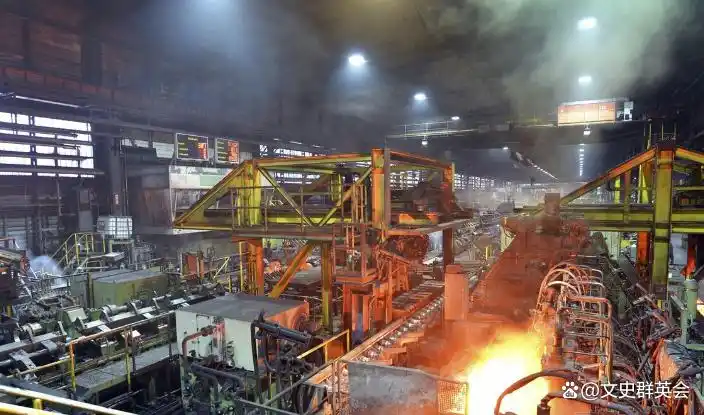
ในบรรดาประเทศผู้ผลิตเหล็กรายใหญ่ของโลก รัสเซียอยู่ในอันดับที่ 5 ของโลก โดยมีผลผลิต 71 ล้านตันต่อปี รองจากจีน อินเดีย ญี่ปุ่น และสหรัฐอเมริกา การส่งออกเหล็กประจำปีเกิน 20 ล้านตัน ทำให้เป็นผู้ส่งออกเหล็กรายใหญ่ เมื่อมองไปที่อุตสาหกรรมเหล็กของรัสเซีย กำลังการผลิตของรัสเซียถูกควบคุมโดยยักษ์ใหญ่ด้านเหล็กรายใหญ่ 4 ราย โดยในจำนวนนี้มีโรงงานเหล็กและเหล็กกล้าแมกนิโทกอร์สค์ (MMK) ที่เชิงตะวันออกของเทือกเขาอูราลที่ใหญ่ที่สุด ด้วยผลผลิตเหล็กประจำปีมากกว่า 11 ล้านตัน จึงถือเป็นตำแหน่งสำคัญในอุตสาหกรรมเหล็กของรัสเซีย
The Origin of MMK
Magnitogorsk Iron and Steel Works, abbreviated as MMK (English abbreviation: MMK), traces its roots back to the period of the Soviet Union's First Five-Year Plan. At that time, to break free from dependence on Western industry and establish an independent heavy industry system, Stalin's government selected Magnitnaya Mountain at the eastern foot of the Ural Mountains as a steel base.
Small-scale iron ore mining had been recorded in this region since the mid-18th century, and by the late 19th century, a mining town with a population of 10,000 had formed. In 1929, with the technical planning and supervision of the American company McKee, the construction of MMK officially started, aiming to build the "world's largest steel complex." Tens of thousands of workers flocked to this wasteland, and by the beginning of 1941, the total number of builders had reached 428,000.
In 1932, the first blast furnace produced pig iron, and in 1933, the first batch of steel was rolled out—marking the rise of the Soviet Union's independent steel industry. By June 1941, on the eve of the Great Patriotic War, MMK had completed 4 blast furnaces, 4 coke ovens, 16 open-hearth furnaces, and 11 rolling mills. In 1940, its pig iron output reached 1.69 million tons and steel output 1.63 million tons, mainly supplying materials for the tractor and automobile manufacturing industries.
After the outbreak of the Great Patriotic War in June 1941, MMK completed the transformation from civilian to military production at an astonishing speed. The factory expanded to produce military supplies such as rockets and grenades, and also built the then-largest No. 5 and No. 6 blast furnaces in the Soviet Union. During the war, 50% of the armor plates for Soviet tanks were supplied by MMK, and the number of open-hearth steel grades produced by the factory exceeded 100.
After the end of World War II, MMK continued to expand its production capacity. Its annual steel output exceeded 10 million tons, and by the late 1970s, the cumulative steel output of MMK had reached 300 million tons. It became an integrated complex with a full industrial chain from mining to steel rolling, employing 57,000 workers and ranking as the world's largest steel enterprise in the 1950s and 1960s.
After the collapse of the Soviet Union, MMK was privatized and restructured into a joint-stock company in 1992. Its output once dropped to 5.8 million tons in 1996. To revitalize its competitiveness, the company launched large-scale equipment upgrades: introducing 3 350-ton converters, hot continuous rolling mills, and two-stand cold rolling mills; building an electric arc furnace with an annual output of 2 million tons and a billet continuous caster; purchasing a long product rolling line from Italy's Danieli and a coating line from Austria's Voestalpine. After its IPO on the London Stock Exchange in 2007, its crude steel output reached 12 million tons.
Geographically, MMK and the city where it is located have formed a symbiotic entity of "a city built on steel." The factory covers an area of 110 square kilometers, equivalent to a large town. The main production area is located on the eastern bank of the Ural River (Asia), while workers commute daily from the residential area on the western bank (Europe), spanning Europe and Asia geographically. The workers' settlement has been upgraded to the city of Magnitogorsk, and the factory employs a quarter of the local working population. Over 85 years, the cumulative coke output has reached 400 million tons.
After the 2014 Crimean crisis, Russia was hit by Western sanctions, making it impossible to import some technologies from Europe and the United States. MMK thus strengthened cooperation with China's steel industry. In 2017, a wholly-owned subsidiary of Sinosteel International won the bid for the 585 million yuan project to build the No. 5 sintering plant, constructing two 300㎡ sintering plants to replace the 50-year-old coke ovens. The annual total output of the entire coke oven project is 2.5 million tons—a scale unprecedented in Russia and rarely seen worldwide.
Upon completion, the project will greatly alleviate the predicament of outdated coke oven equipment and insufficient output in Russian steel mills, further improving their production capacity and efficiency. It is reminiscent that in the 1950s, with the help of the Soviet Union, China upgraded Anshan Iron and Steel Works (Ansteel), which once became China's largest steel mill. Today, Russia's largest steel mill has declined to the point where it needs technical support from China to develop and breathe—something that many people did not expect back then.
In 2024, due to weak domestic and foreign demand, the average price of Russian steel fell by 5%-7%. The output of Magnitogorsk Iron and Steel Works decreased slightly, reaching over 11 million tons for the whole year, and its galvanized and color-coated sheet production capacity ranks first in Russia. In addition, the factory's annual revenue was about 60 billion yuan. Such production capacity is less than one-tenth of that of China's largest steel enterprise, Baowu Group. Overall, it is equivalent to the level of China's Nanjing Iron and Steel Group or Shaanxi Iron and Steel Group, and ranks no higher than 20th among all steel companies in China.
Translation Notes
- Precision and Uniformity of Professional Terms and Organization Names: "Steel giants" is translated as "steel giants" for international readability; "sintering plant" as "sintering plant" in line with global steel industry terminology. Names such as "Magnitogorsk Iron and Steel Works (MMK)", "Sinosteel International", and "Baowu Group" adopt official standard translations to ensure information accuracy.
- Adaptation of Historical and Geographical Expressions: "Soviet Union's First Five-Year Plan" and "Great Patriotic War" use universally recognized English historical terms. Geographical descriptions like "eastern foot of the Ural Mountains" and "spanning Europe and Asia" adopt precise directional expressions conforming to English geographical writing conventions.
- Balance of Fluency and Logic: Long sentences are reasonably split (e.g., data sentences on production capacity and exports). Narrative content uses time-sequential sentence structures common in English narrative writing, while analytical content employs contrastive structures to highlight core information, ensuring both professional rigor and readability for English readers.